Product Center

MengziFrozen food packaging bag
Category:
Tel: 400-888-8888
Product Description
Frozen product packaging is a type of packaging material used to protect and preserve frozen foods.
Brief description:
Frozen product packaging is designed to ensure the quality, safety, and freshness of frozen foods under low-temperature conditions, while also facilitating storage, transportation, and retail sales.
For example, in the supermarket’s frozen-food section, all kinds of frozen products rely on appropriate packaging to maintain their quality.
Detailed Description of Frozen Product Packaging
The materials used for packaging frozen products are typically carefully selected and combined. Polyethylene (PE), with its excellent low-temperature resistance and flexibility, is often employed as the base layer, ensuring it remains intact even in extremely cold conditions. Polypropylene (PP) provides strength and rigidity, helping to maintain the package’s shape. Polyester (PET) enhances wear resistance and transparency, allowing consumers to easily inspect the contents. Meanwhile, aluminum foil serves as a critical barrier, effectively blocking oxygen, moisture, and light to prevent oxidation and spoilage of the food.
In terms of bag types, three-side-seal bags offer a compact design and superior sealing, making them ideal for packaging small frozen items such as shrimp. Stand-up pouches can stand upright on their own, providing an eye-catching display and are commonly used for frozen fruit slices. Zipper bags allow consumers to open and close them repeatedly, making them well-suited for household storage of frozen meats. Lastly, accordion‑style bags provide ample capacity, perfect for packaging bulky frozen vegetables.
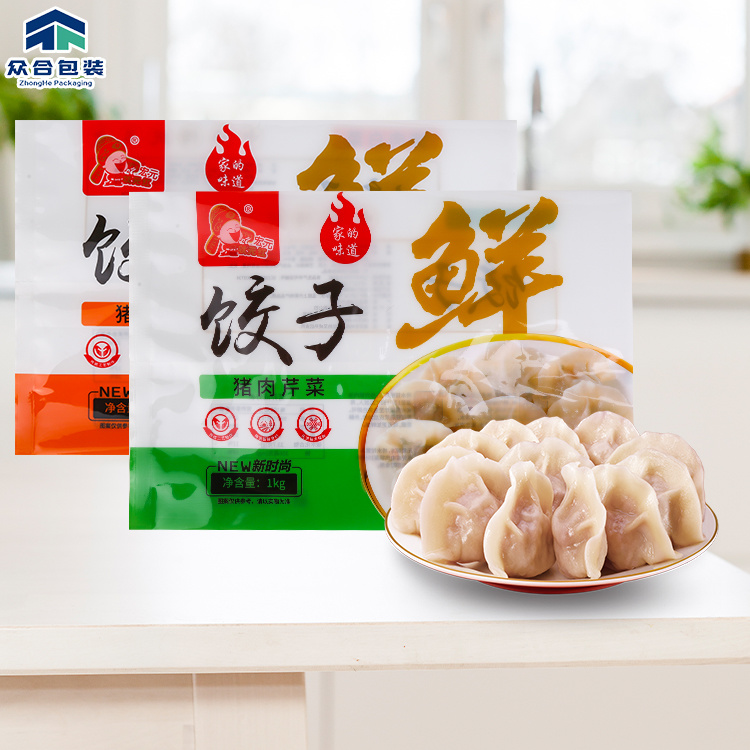
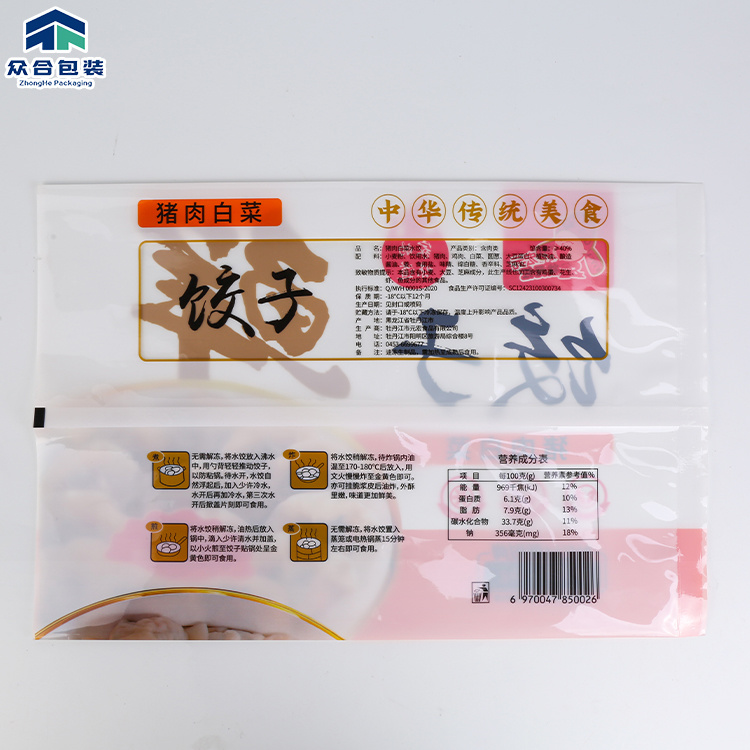
In addition, frozen‑product packaging is designed to provide frost resistance and puncture resistance. The printing on the package surface typically uses low‑temperature‑resistant inks to clearly display product information, shelf life, and instructions for use.
For example, the packaging of a frozen pizza might feature a composite structure of PET/aluminum foil/PE, with an accordion-style pouch design and printed graphics that showcase an appetizing pizza image along with detailed ingredient information.
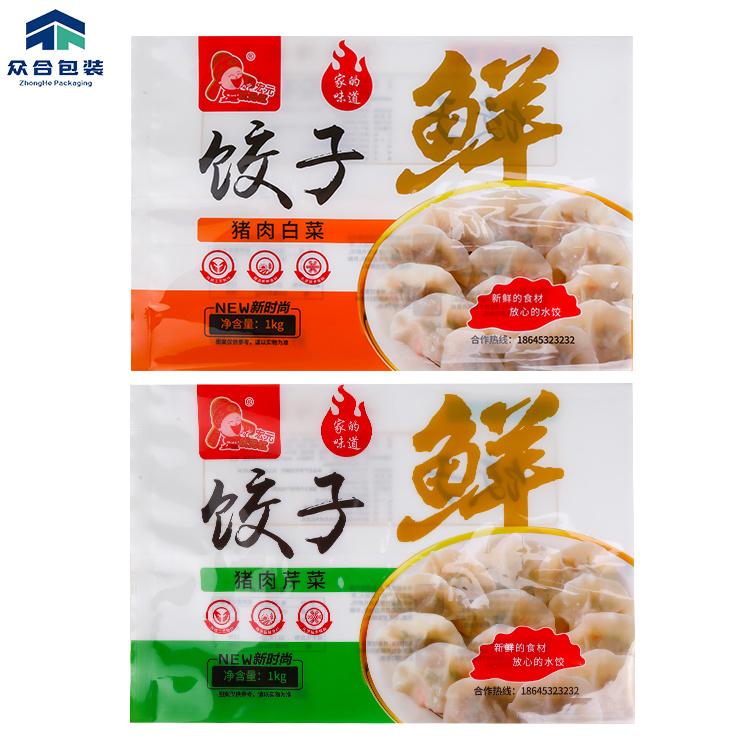
What is a frozen product packaging?
Frozen-product packaging refers to a range of containers or bags specifically designed for frozen foods, intended to provide effective protection and optimal storage conditions.
It is not merely a layer of packaging material; it is also a critical component in ensuring the quality and safety of frozen foods.
Why is frozen product packaging called this?
This is because it was specifically developed and named to meet the unique preservation requirements of frozen products, such as extremely low temperatures, prevention of moisture condensation, and protection against oxidation.
What types of bags are used for packaging frozen products?
Common types of packaging bags for frozen products include:
Three-side seal pouch: Three-sided sealing provides a strong seal, effectively preventing cold air leakage and the ingress of external contaminants.
Stand-up pouch: Featuring a specially designed bottom, it can stand upright on shelves or tables, delivering excellent display performance.
Zipper bags: Equipped with a zip closure, they allow consumers to access the contents multiple times and help maintain the frozen state of leftover food.
Accordion bag: Its accordion‑like sides increase internal capacity, making it ideal for packaging bulky frozen products.
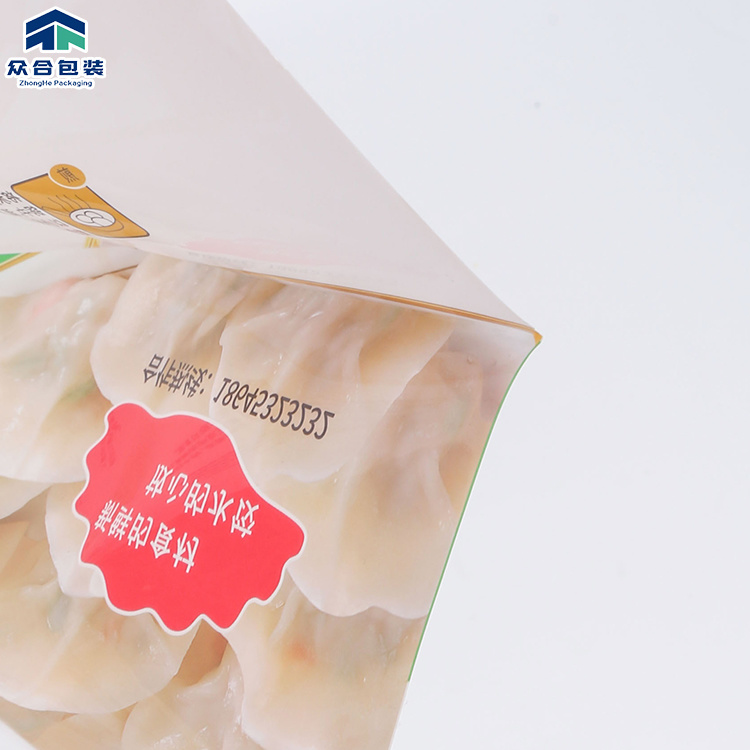
Packaging Characteristics and Material Specifications for Frozen Products
Features:
Excellent low-temperature resistance, remaining neither brittle nor prone to cracking at subzero temperatures.
Excellent barrier properties, preventing the permeation of oxygen, moisture, and odors.
Frost‑prevention performance, reducing frost formation on the packaging surface.
Puncture and tear resistance, capable of withstanding the sharp edges of frozen foods and the stresses encountered during handling.
Material Parameters:
The thickness of the film typically ranges from 0.05 mm to 0.2 mm, adjustable according to the specific requirements of each product.
Tensile strength is typically required to exceed 15 MPa to ensure the mechanical integrity of the packaging.
The oxygen transmission rate should be less than 50 cm³/(m²·24 h·0.1 MPa), and the water vapor transmission rate should be less than 5 g/(m²·24 h) to ensure excellent barrier performance.
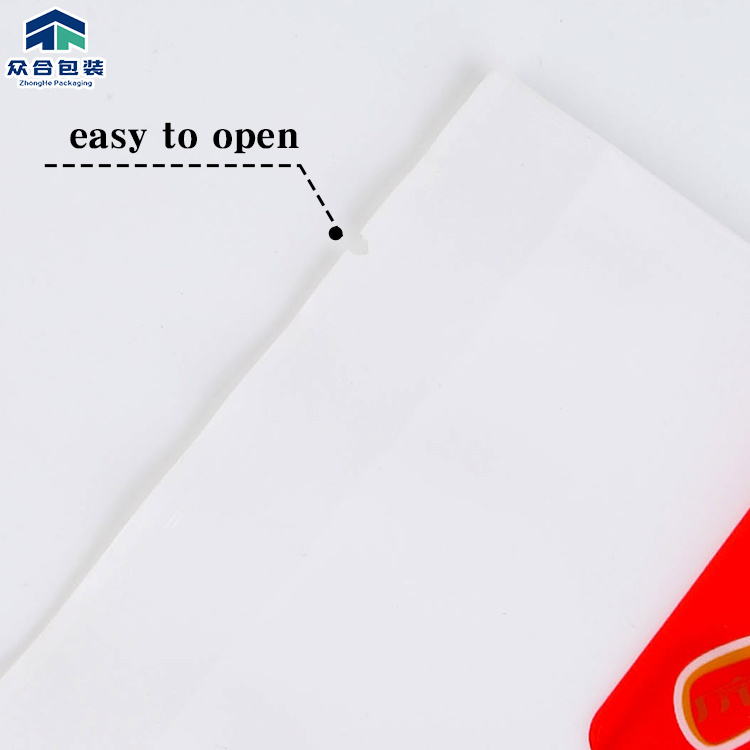
Frozen Product Packaging and Processing Procedure
Raw material selection: Based on product requirements, choose raw materials that meet food-contact standards and exhibit excellent low-temperature resistance, such as PE, PP, PET, and aluminum foil.
Printing Plate Making: Design the printing pattern and produce a high-precision printing plate.
Printing: Employing gravure or flexographic printing techniques, patterns, text, and logos are printed onto packaging materials, with low-temperature‑resistant inks used to ensure print quality.
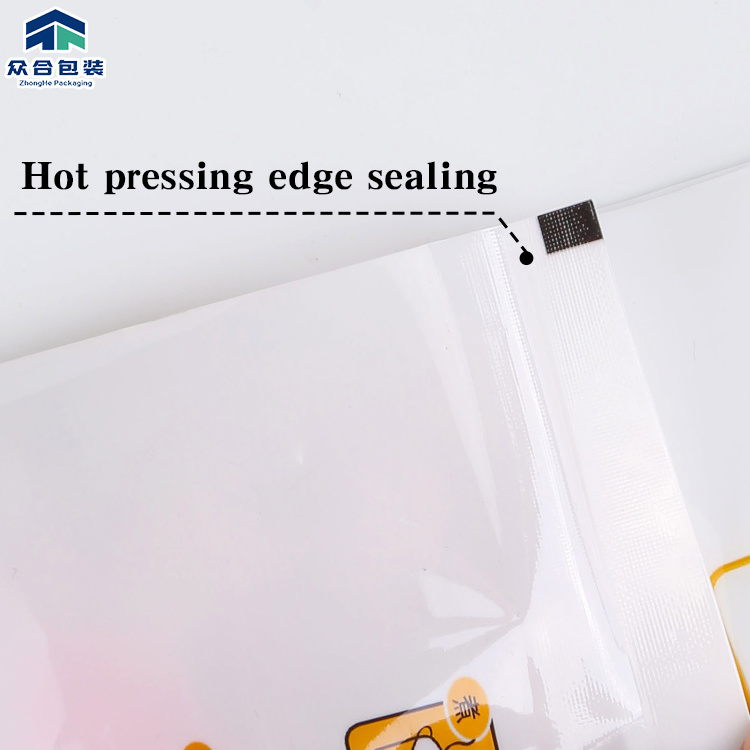
Lamination: Multi-layer materials are bonded together using adhesives or thermal pressing, resulting in packaging materials with enhanced overall performance.
Curing: The laminated material is placed in a controlled environment to allow the adhesive to fully cure, thereby enhancing interlayer bonding.
Slitting: Cutting the laminated wide‑format material into appropriate widths according to predetermined dimensions.
Bag Making: Using bag-making equipment, the slit materials are formed into desired bag styles, such as three-side seal bags and stand-up pouches, followed by heat-sealing.
Quality Inspection: Conduct comprehensive quality inspections on the packaging of finished frozen products, including visual inspection, dimensional measurements, seal strength testing, and barrier performance evaluation, to ensure compliance with quality standards.
Packaging: Sort, count, and package qualified products in preparation for shipment.
Our Advantages
As a manufacturer, we offer the following advantages:
Advanced Equipment and Technology: Equipped with state-of-the-art production machinery and cutting-edge packaging technologies, we are capable of manufacturing high-quality, high-precision frozen‑food packaging.
Rigorous Quality Management: We have established a comprehensive quality management system that implements stringent, end-to-end monitoring—from raw material procurement to the release of finished products—ensuring compliance with national and industry standards.
Customization Capabilities: We can tailor packaging solutions to meet clients’ specific needs, including material selection, bag‑style design, and print content.
Cost Control: By optimizing production processes, procuring raw materials efficiently, and implementing effective production management, we successfully reduce manufacturing costs, enabling us to offer customers competitive pricing.
Fast Delivery Capability: An efficient production team and logistics network ensure on-time order fulfillment, meeting customers’ urgent needs.
What does frozen-product packaging offer to customers?
For customers, our frozen product packaging delivers the following key benefits:
Extended shelf life: Thanks to superior barrier and sealing properties, it effectively prolongs the shelf life of frozen foods, reducing food waste and losses.
Maintain Quality: Preserve the original color, texture, and nutritional content of frozen foods, thereby enhancing consumer satisfaction.
Enhance brand image: Elegant packaging design and high-quality printing help elevate your brand’s image and strengthen its market competitiveness.
Convenient for Sales and Storage: Appropriate bag styles and packaging designs facilitate product display and storage management at the point of sale.
Scope of Application for Frozen Product Packaging
Frozen product packaging is widely used in the following fields:
Frozen meat: packaging for beef, pork, chicken, and other types.
Frozen seafood: includes fish, shrimp, shellfish, and more.
Frozen vegetables and fruits: such as frozen corn, broccoli, strawberries, and more.
Frozen foods: such as dumplings, wontons, and tangyuan.
Supermarkets and Retail: In the supermarket’s frozen-food section, consumers are offered a variety of packaged frozen foods.
Foodservice companies: Provide packaging for large quantities of frozen ingredients to restaurants, hotels, and other establishments.
Food processing plant: Used to package processed frozen foods in preparation for distribution.
Inquire Now
Contact us immediately for free expert consultation services!
Quick Navigation
Contact Us
Address:
No. 33-36, Gate 1, Punan Road, Shenbei New District, Shenyang City, Liaoning Province
Tel:+86 13664115140 Haijun Zhang
Email:kevin@syzhpacking.com
Tel:+86 13358857441 Yingying Xing (Mia)
Email:mia@syzhpacking.com
Email(Haijun Zhang):kevin@syzhpacking.com
 Haijun Zhang
Tel(Haijun Zhang):+8613664115140
 WhatsApp (Mia)
Email(Mia):kevin@syzhpacking.com
Tel(Mia):+8618640522148