Product Center

MengziMeat packaging bag
Category:
Tel: 400-888-8888
Product Description
Meat product packaging refers to the packaging materials used to encase and protect meat.
Brief description:
Meat product packaging is designed to ensure the freshness, hygiene, and safety of meat while facilitating storage, transportation, and retail sales. It serves as a protective barrier specifically tailored for meat, with the primary goal of safeguarding its quality, safety, and sanitary integrity throughout every stage of the supply chain, and providing convenient methods for storage and sale.
For example, the various pre-packaged pork, beef, chicken, and other meats commonly found in the market all rely on appropriate packaging.
Detailed Description of Meat Product Packaging
The materials used in meat product packaging are typically carefully selected and combined. Polyethylene (PE), with its excellent flexibility and moisture‑barrier properties, is often employed as the inner layer that comes into direct contact with the meat; polypropylene (PP), prized for its high strength and heat resistance, provides structural support to the package; polyethylene terephthalate (PET), boasting superior transparency and barrier performance, helps showcase the meat’s appearance while preventing the ingress of external gases; and nylon (PA), with its high tensile strength and outstanding oxygen‑barrier properties, plays a crucial role in multilayer composite packaging.
In terms of packaging types, vacuum bags remove air to create an oxygen‑free environment, significantly extending the shelf life of meat and making them particularly suitable for long‑distance transportation and prolonged storage. Modified‑atmosphere bags allow precise adjustment of the internal gas composition—such as increasing carbon dioxide levels to inhibit bacterial growth—while preserving the meat’s color and texture. Skin‑packaging bags conform closely to the shape of the meat, offering a realistic presentation while effectively preventing blood and juices from leaking out. Three‑side seal bags and stand‑up pouches, meanwhile, ensure secure sealing while facilitating convenient display and easy access for consumers.
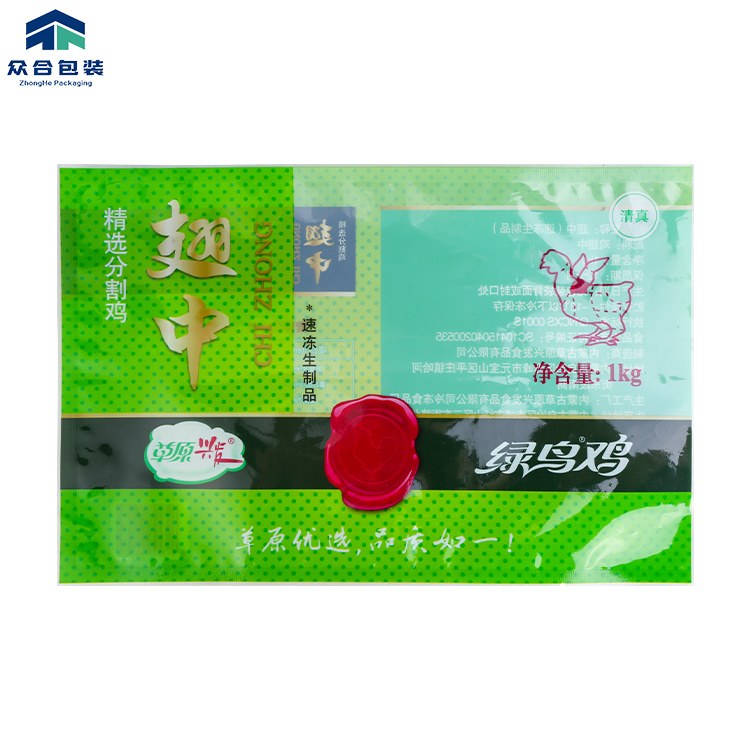
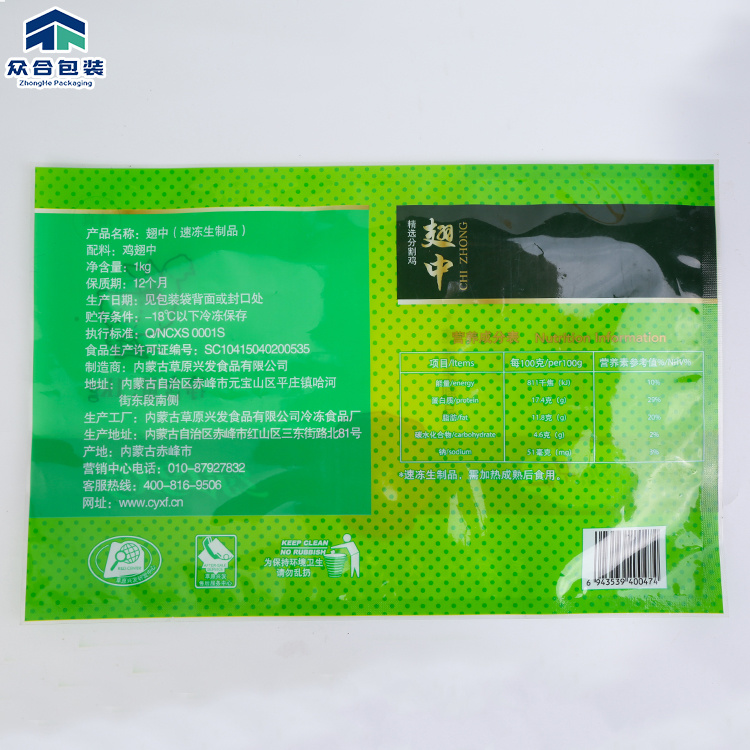
In addition, meat product packaging is designed to resist grease penetration and withstand low temperatures. The printing on the package typically includes key information such as the type of meat, its origin, the shelf life, and the processing method, enabling consumers to make informed choices.
For example, the packaging of fresh beef might use a PA/PE composite structure, in the form of a modified-atmosphere bag, with clear printing indicating the beef’s origin and its shelf life.
It is produced using specific ingredients and processes, tailored to the characteristics of meat and market demand.
Why is meat product packaging called this?
Because it was specifically developed and designed to meet the packaging needs of meat—a unique food product—its functionality, materials, and design are all tailored to the characteristics of meat.
What types of bags are used for packaging meat products?
Common types of packaging bags for meat products include:
Vacuum bags: By removing air, they reduce oxygen levels and extend the shelf life of meat.
Modified-atmosphere bags: Adjust the internal gas composition to optimize freshness preservation.
Vacuum-sealed bags: snugly fit around the meat, enhancing its visual appeal.
Three-side seal pouch: sealed on three sides, with a simple structure and excellent sealing performance.
Stand-up pouch: Can stand upright for convenient display and storage.
Packaging characteristics and material specifications for meat products
Features:
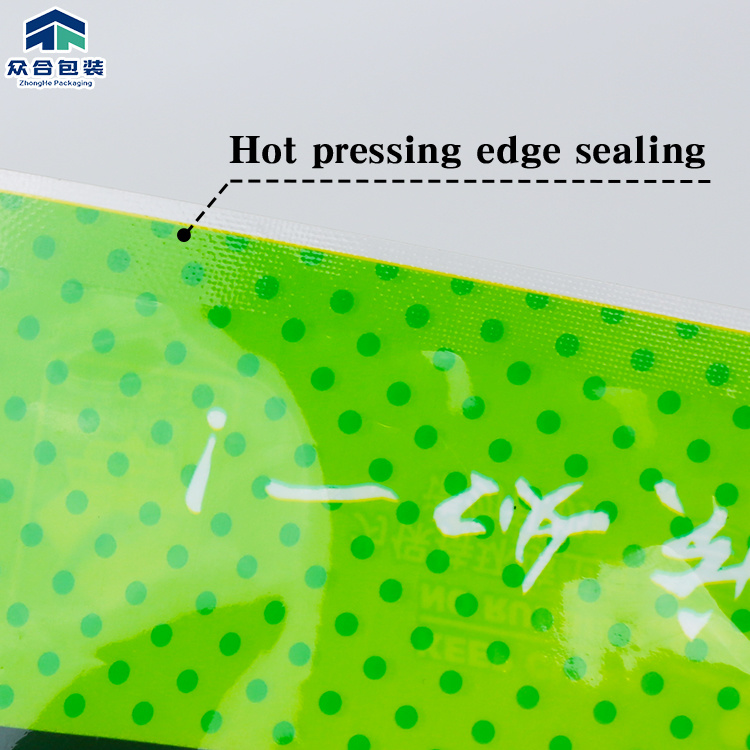
Excellent barrier properties, preventing the ingress of oxygen, moisture, and microorganisms.
Oil-resistant and puncture-resistant, preventing the penetration of blood and grease.
Appropriate transparency allows consumers to easily assess meat quality.
Meets food safety standards; non-toxic and odorless.
Material Parameters:
The film thickness typically ranges from 0.08 mm to 0.2 mm, with selection based on the type of meat and preservation requirements.
Oxygen transmission rate is typically required to be below 50 cm³/(m²•24h•0.1 MPa) to minimize oxidation.
The water vapor transmission rate should be less than 5 g/(m²•24 h) to prevent moisture loss.
The tensile strength shall exceed 20 MPa to ensure the packaging is resistant to rupture.
Meat product packaging and processing procedure
Material Procurement: Select raw materials such as PE, PP, PET, and PA that meet food-contact standards and preservation requirements.
Print Design (if required): Design and produce printing plates according to the client’s specifications, using eco-friendly inks for printing.
Lamination: By means of adhesives or co-extrusion, films of different materials are laminated together to create packaging materials with combined properties.
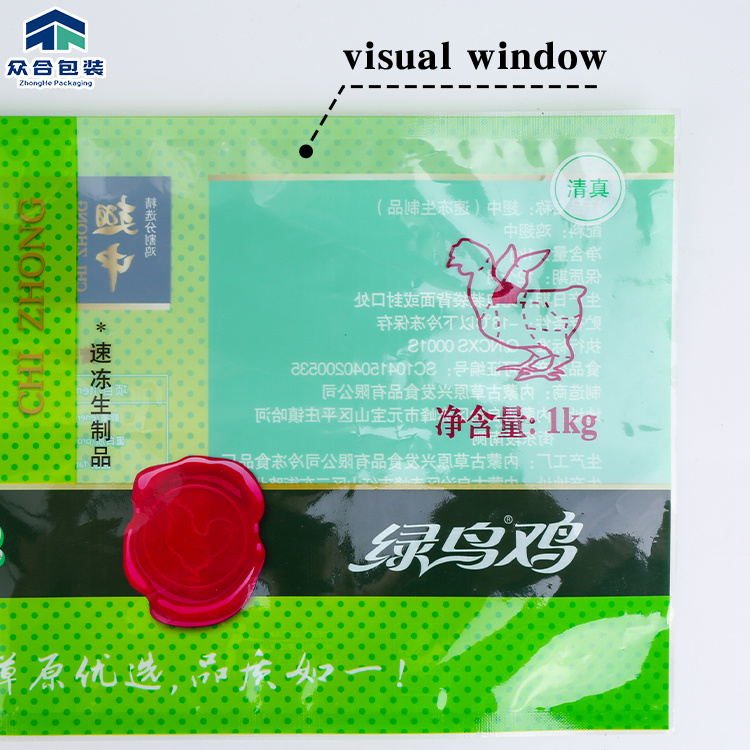
Bag-making: Using bag-making equipment, the laminated material is processed into various bag types, such as vacuum bags, modified-atmosphere bags, and skin‑pack bags, and then subjected to heat sealing or other sealing processes.
Sterilization and Disinfection (for Certain Products): For certain meat packaging applications with stringent requirements, sterilization and disinfection processes are employed to ensure a sterile package.
Quality Inspection: Conduct comprehensive quality inspections on the packaging of finished meat products, covering aspects such as appearance, dimensions, seal strength, and barrier properties.
Packaging: Sort, count, and package qualified products in preparation for delivery to the customer.
Our Advantages
As a manufacturer, we possess the following distinct advantages:
Advanced production technology: Equipped with state-of-the-art manufacturing equipment and processes, we are able to produce high-quality, high-performance packaging for meat products.
Rigorous Quality Control: From raw material procurement to finished-product shipment, we have established a stringent quality-control system to ensure that every product meets the highest standards.
Customized Services: We offer tailored packaging solutions to meet the specific needs of our clients, catering to the diverse requirements of various meat products and markets.
Cost-effectiveness: By optimizing production processes and management, we effectively reduce manufacturing costs, enabling us to offer customers competitive pricing.
Rapid Market Response: Closely monitor market trends and customer needs, swiftly adjust production strategies, and promptly launch new products that align with emerging market demands.
What do meat product packages offer to customers?
For customers, our meat product packaging delivers the following key benefits:
Enhanced preservation: Significantly extends the freshness and shelf life of meat, reducing losses due to spoilage.
Quality Assurance: Preserves the meat’s original color, flavor, and nutritional content, enhancing consumer satisfaction.
Brand Image Building: Elegant packaging design and the selection of premium materials help enhance a brand’s image and market competitiveness.
Sales Promotion: Attract consumers’ attention and purchasing interest, boosting sales volume and market share.
Scope of Application for Meat Product Packaging
Meat product packaging is widely used in the following sectors:
Fresh meat: packaging for fresh pork, fresh beef, fresh lamb, and similar products.
Frozen meats: including frozen chicken, frozen fish, frozen beef, and more.
Processed meats: packaging for products such as ham, sausages, and bacon.
Supermarket: At the retail level, it provides consumers with neatly packaged, hygienic meat products.
Farmers’ market: Convenient for meat vendors to display and sell their products.
Meat processing plant: Used for the mass production and packaging of various meat products.
Foodservice companies: Provide safe and convenient meat packaging for restaurants, cafeterias, and other food establishments.
Inquire Now
Contact us immediately for free expert consultation services!
Quick Navigation
Contact Us
Address:
No. 33-36, Gate 1, Punan Road, Shenbei New District, Shenyang City, Liaoning Province
Tel:+86 13664115140 Haijun Zhang
Email:kevin@syzhpacking.com
Tel:+86 13358857441 Yingying Xing (Mia)
Email:mia@syzhpacking.com
Email(Haijun Zhang):kevin@syzhpacking.com
 Haijun Zhang
Tel(Haijun Zhang):+8613664115140
 WhatsApp (Mia)
Email(Mia):kevin@syzhpacking.com
Tel(Mia):+8618640522148